Inside Abbey Road Studios: The Gear Behind Sgt. Pepper
I once tried explaining to a younger musician friend that Sgt. Pepper’s Lonely Hearts Club Band was recorded on just four tracks. He didn’t believe me at first. “Four? Like, total?” Yes, total. No forty-track digital session, no unlimited undo button, just four tracks and a room full of engineers figuring things out as they went.
That’s really the heart of this story. The Abbey Road gear used to make Sgt. Pepper wasn’t advanced by today’s standards at all. It was clever people squeezing every bit of creativity out of very limited tools, and that limitation is part of why the album still sounds the way it does.
Quick Answer
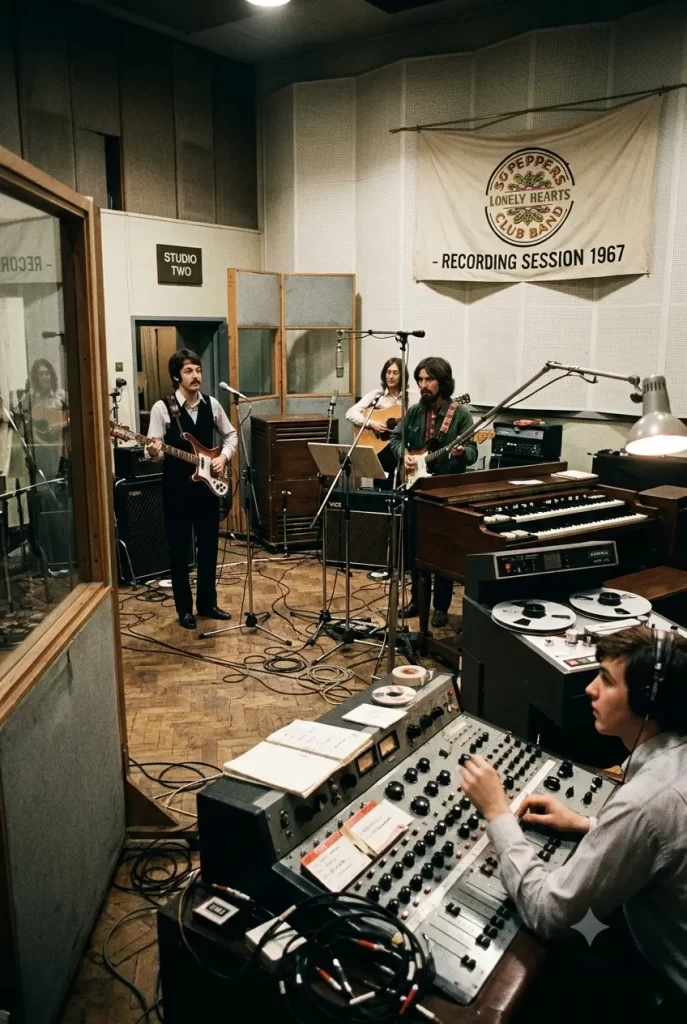
The Abbey Road gear used to record Sgt. Pepper’s Lonely Hearts Club Band centered on a Studer J37 four-track tape machine, EMI’s REDD.51 valve mixing console, Fairchild 660 limiters, an EMT 140 plate reverb, and the studio’s built-in echo chambers. Engineer Ken Townsend also invented Artificial Double Tracking during these sessions, using a second tape machine to create a doubling effect without asking the band to re-record vocals by hand. Most of the album was recorded in Abbey Road’s Studio Two between late 1966 and early 1967.
Why the Gear Mattered So Much
By 1966, the Beatles had stopped touring and were spending far more time in the studio. That extra time, combined with George Martin’s production skill and Geoff Emerick’s ear for sound, pushed the team to lean harder on the technical side of recording.
Producer George Martin later argued that the limits of four-track recording actually helped the album, forcing creative decisions instead of endless options. Engineers had to bounce tracks down, combine instruments, and commit to choices early, which shaped the finished sound in ways a modern multitrack setup never would have.
The Studer J37 Four-Track Recorder
At the center of the whole album was the Studer J37, a four-track tape machine that recorded most of Sgt. Pepper in Abbey Road’s Studio Two.
With only four tracks available, engineers had to “bounce” recorded material down to fewer tracks to free up space for new overdubs. This meant combining, say, drums, bass, and rhythm guitar onto a single track so three more tracks were open for vocals, strings, or extra instruments.
It sounds limiting, but it forced a level of planning that many engineers say gave the album its layered, dense character.
The REDD.51 Mixing Console
Mixing happened on EMI’s REDD.51, a valve-based console built specifically for Abbey Road. Only a handful of these were ever made, and the one installed in Studio Two became closely tied to the Beatles’ sound during this period.
A few details about the REDD.51 stand out:
- It used custom EMI-built preamps called the REDD.47
- It offered a small number of input channels compared to modern desks
- Every signal ran through vacuum tubes, giving the recordings their warm, slightly rounded tone
- It was eventually replaced in 1968 by the solid-state TG12345 console, once eight-track recording arrived
Many engineers who worked on both consoles later said something was lost when Abbey Road moved away from the all-valve REDD desks. The warmth those tubes added is hard to fully replicate, even now.
The REDD.37’s Smaller Role
The REDD.37, often nicknamed “the Beatles’ console” in popular writing, is actually more associated with their earlier albums. By the time of Sgt. Pepper, most mixing work had shifted to the REDD.51, which many engineers considered the real workhorse behind the band’s mid-to-late 1960s sound.
Artificial Double Tracking (ADT)
One of the most important pieces of Abbey Road gear used during this period wasn’t a physical machine you could point to. It was a technique invented specifically to solve a problem.
The Beatles, especially John Lennon, disliked recording the same vocal part twice just to create a thicker, doubled sound. EMI technical engineer Ken Townsend solved this by feeding the same signal into a second tape machine, the BTR2, running at a slightly different speed than the main J37 four-track.
That tiny timing difference created a natural-sounding doubling effect without anyone having to sing the same line again. Lennon reportedly loved the effect and used variations of it constantly throughout the album.
Here’s a simple breakdown of how ADT worked:
- The original signal was recorded on the Studer J37 four-track machine
- The same signal was simultaneously fed to the BTR2 mono recorder
- Because the BTR2 ran at a different tape speed with different head spacing, a slight delay occurred
- Blending both signals together created the thickened, doubled sound heard on many tracks
Fairchild 660 Limiters
For controlling loud, punchy sounds like drums, engineers relied on Fairchild 660 valve limiters and compressors. These American-built units were prized for smoothing out peaks without draining the energy from a performance.
Engineer Geoff Emerick specifically used heavy compression through Fairchild units to shape Ringo Starr’s drum sound, a technique that had already defined parts of “Revolver” and continued into Sgt. Pepper.
Reverb: Chambers and the EMT 140 Plate
Abbey Road had physical echo chambers built into the building itself, using speakers and microphones placed in enclosed spaces to create natural-sounding reverb. For Sgt. Pepper, engineers combined this with the EMT 140, a plate reverb unit that offered a smoother, more controllable sound.
Depending on the song, engineers would choose between the two, or blend them, based on how natural or artificial they wanted a sound to feel.
The RS124 Compressor and RS127 Presence Box
Alongside commercial gear, Abbey Road’s own technical department built custom equipment specifically for in-house use. Two pieces mattered a lot during the Sgt. Pepper sessions:
- The Altec RS124, modified by Abbey Road’s engineers, added a distinct compressed character used heavily on drums and other tracked instruments
- The RS127 “Presence Box” was an external equalizer built by the studio’s own engineering team, used to shape tone in ways the REDD console alone couldn’t manage
These custom tools are a big part of why the album has such a specific, hard-to-copy character. Some of this equipment simply didn’t exist anywhere else.
Studio Two vs. Studio One
Most of Sgt. Pepper was tracked in Abbey Road’s Studio Two, a large room known for a brighter, cleaner sound compared to the smaller studios in the building.
Interestingly, the reprise version of the title track was recorded in the much bigger Studio One instead, since Studio Two happened to be booked by another act that day. Engineers noted the drum sound came out harder and more aggressive in that larger space, giving the reprise a rawer edge compared to the original version.
Outside Abbey Road: A Rare Exception
Almost the entire album was recorded inside EMI’s Abbey Road building, but there was one notable exception. Part of “Fixing a Hole” was recorded at Regent Sound, a smaller independent studio in central London, which also happened to use a Studer J37 tape machine.
This was one of the very few times the Beatles worked outside EMI’s own facilities while still signed to the label.
Why This Gear Still Gets Studied Today
Modern studios can access unlimited tracks, endless plugins, and instant editing. Yet producers and engineers continue to study the Abbey Road gear used for Sgt. Pepper because the creative decisions forced by those limitations still shape how people think about arrangement and mixing today.
Software companies have even built plugin versions of the REDD consoles and Abbey Road’s tape machines, trying to recreate that specific tone digitally. None of them fully replace the real thing, but the demand alone shows how much this equipment still matters.
What Surprised Me Most Researching This
Before digging into this, I assumed most of Sgt. Pepper’s sound came from clever songwriting and arrangement alone. The technical side surprised me far more than expected.
Discovering that something as simple as a second tape machine running at a slightly different speed created one of the album’s signature vocal effects really changed how I think about the record. So much of what makes the album feel unique came from engineers solving practical problems, not from expensive or exotic equipment.
Frequently Asked Questions
What tape machine was used to record Sgt. Pepper?
The Studer J37 four-track tape machine was the primary recording device used for most of the album at Abbey Road’s Studio Two.
What mixing console was used for Sgt. Pepper?
Most mixing was done on EMI’s REDD.51 valve console, a rare custom-built desk with only a handful ever produced.
What is Artificial Double Tracking?
It’s a technique invented by EMI engineer Ken Townsend that used two tape machines running at slightly different speeds to create a natural doubling effect on vocals, without requiring a second live take.
Was any part of the album recorded outside Abbey Road?
Yes, part of “Fixing a Hole” was recorded at Regent Sound Studio in central London, one of the few times the Beatles worked outside EMI’s own facilities during this period.
Why does Sgt. Pepper sound so different from modern recordings?
The combination of four-track limitations, valve-based gear, custom in-house equipment, and inventive engineering techniques created a dense, layered sound that’s difficult to fully reproduce with modern digital tools.
Editor’s Opinion
its wild to me that this whole album got made on just four tracks and some homemade abbey road gadgets. today we have unlimited tracks and still can’t always make something sound this good. i think the limits actualy helped them, they had to be smart instead of just piling on stuff forever. the ADT trick is probably my favorite part of this hole story, such a simple fix for a problem lennon didnt even want to deal with. real diy engineering if you ask me.