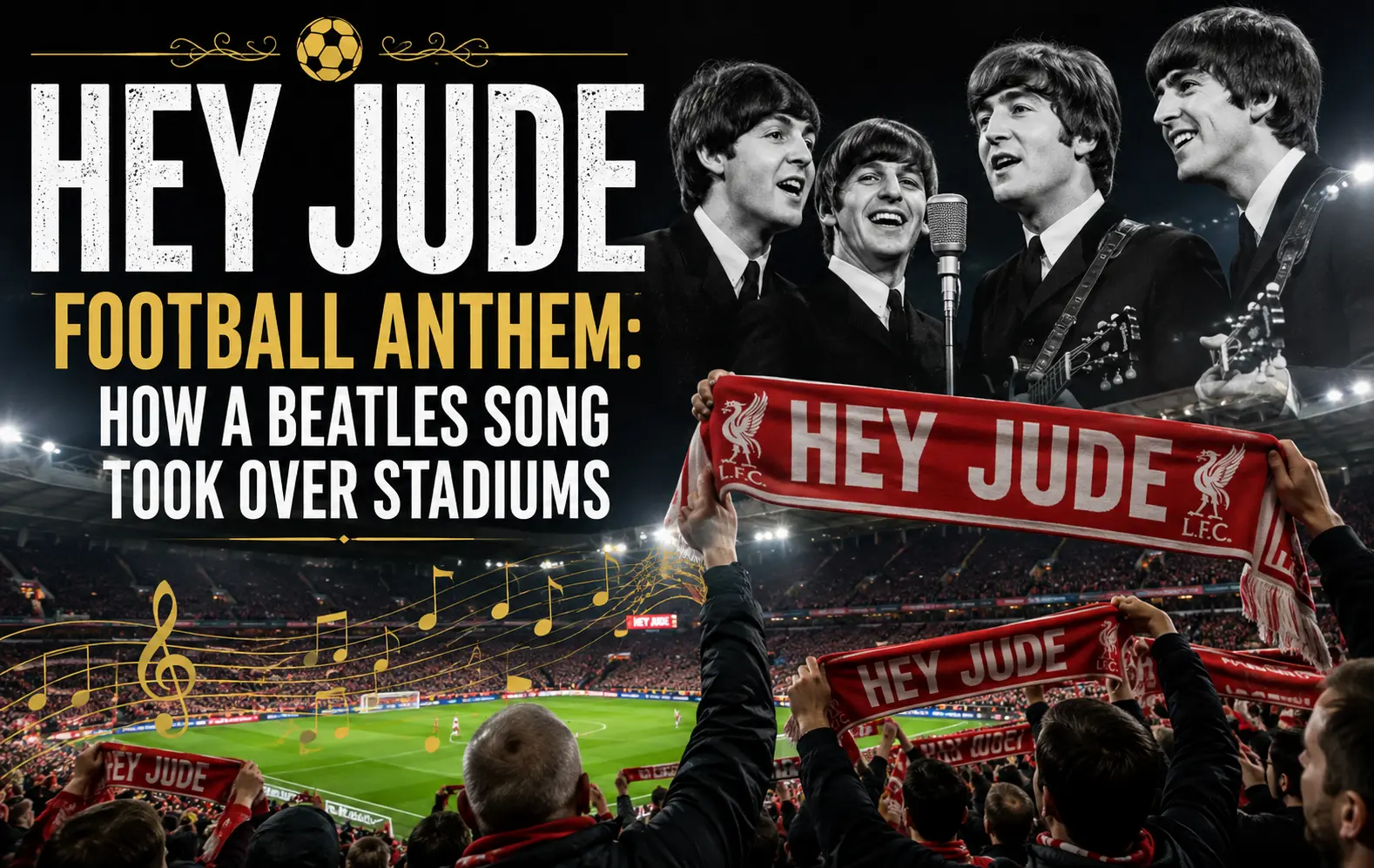
Hey Jude Football Anthem: How a Beatles Song Took Over Stadiums
I watched a World Cup highlight clip a while back where an entire stadium broke into “Hey Jude” after a match, thousands of voices belting out the “na-na-na” outro like it was written for that exact moment. It gave me actual chills, and I’m not even that big a football fan.
That’s the strange power of this song. A track written in 1968 about comforting a five-year-old boy somehow became one of the loudest, most emotional traditions in modern football. The Hey Jude football anthem story spans decades, several clubs, and one very fitting name that nobody could have planned for.
Quick Answer
“Hey Jude” became a football anthem because its simple, repetitive “na-na-na-na” outro is easy for large crowds to sing without needing to know any lyrics. Brentford fans started singing it in 1969, just a year after release, thanks to their long-serving stadium announcer. Manchester City adopted it around their 1968 league title. Decades later, it exploded again when England midfielder Jude Bellingham’s name lined up perfectly with the song’s title, turning it into a global chant during international tournaments.
Where It All Started
“Hey Jude” was written by Paul McCartney to comfort Julian Lennon, John Lennon’s young son, during his parents’ difficult separation. The song opened with gentle, personal lyrics but ended with a long, chanted outro that millions of people can sing along to without knowing a single verse.
That outro turned out to be perfect for stadiums. Football grounds don’t need clever lyrics to create atmosphere. They need something loud, simple, and easy for tens of thousands of strangers to sing together at the exact same time.
Brentford: The Earliest Football Connection
Long before anyone associated the song with international superstars, Brentford Football Club in West London had already claimed it as their own.
Their tradition dates back to 1969, just one year after the song’s release. It was introduced by the club’s stadium announcer, a man known simply as Mr. Brentford, who remains one of the longest-serving public address announcers in English football history.
Brentford fans developed their own twist on the chorus, occasionally swapping the word “Jude” for the club’s own name during the singalong. Decades later, the tradition is still alive at their home matches, tying the club permanently to the song.
Manchester City’s Adoption of the Anthem
Around the same era, Manchester City fans began embracing “Hey Jude” too, tying it to their 1968 league title win. That title turned out to be their last major triumph for decades, giving the song a nostalgic, almost bittersweet meaning for older supporters who remembered that period.
Even after the club’s ownership changes and modern success starting in 2008, “Hey Jude” stayed part of matchday tradition at their home stadium, often played over the speakers before kickoff.
There’s something a little ironic about this too. The Beatles were famously from Liverpool, City’s fierce rival city, yet the song crossed that divide without much resistance from City’s own fanbase.
Why the Song Works So Well in Stadiums
A few specific qualities make “Hey Jude” almost perfectly suited for football crowds:
- No lyrics required. The outro is just a repeated melodic phrase, so new fans can join in instantly
- Big, anthemic build. The song naturally grows louder and more intense, matching the emotional swings of a match
- Flexible for personalization. Fans can easily swap in a name, a club, or a chant variation without disrupting the melody
- Familiarity across generations. Nearly everyone recognizes the tune, regardless of age or musical taste
These traits explain why it spread well beyond just one or two clubs over the decades.
The Jude Bellingham Connection
The most dramatic modern chapter of this story involves footballer Jude Bellingham. His first name lines up so naturally with the song’s title that fans practically didn’t need to change a single word.
The chant reportedly gained real momentum during Bellingham’s time playing for Borussia Dortmund in Germany. Fans there began singing “Hey, Jude Bellingham” to the familiar tune whenever he performed well.
After his move to Real Madrid, supporters at the Santiago Bernabéu picked up the same tradition almost immediately, using it to celebrate his match-winning contributions.
How It Became a World Cup Moment
The chant reached its biggest audience yet during England’s run through international tournaments, including matches at the 2026 World Cup. Footage of tens of thousands of England fans singing “Hey Jude” together after a win against Norway spread widely online, showing Bellingham visibly emotional as the crowd sang his adapted name into the chorus.
What makes this version special is how naturally it fits. Fans aren’t forcing a name into the melody the way many football chants require. The rhythm and syllables of “Jude” fall right into place, as if the song had been waiting fifty years for the right player to come along.
A Long Football Tradition of Borrowed Songs
Adapting popular songs into personalized chants isn’t new in football. Supporters have long taken familiar tunes and rewritten lyrics to fit their favorite players or teams.
A few common patterns show up across football chant culture:
- Simple, repetitive songs get chosen most often, since crowds need to join in instantly without rehearsal
- A player’s name usually needs to fit the rhythm naturally, or the chant rarely catches on beyond one stadium
- Chants spread fastest during major tournaments, where fans from different clubs unite around one national team
- Older, nostalgic songs tend to last longer, since they carry emotional weight beyond just the current roster
“Hey Jude” checks every one of these boxes almost perfectly, which helps explain why it kept resurfacing across different clubs and different decades.
What Surprised Me Most Researching This
Going into this, I assumed the Bellingham connection was the entire story, just a lucky coincidence between a song title and a footballer’s name. It turns out the football relationship with “Hey Jude” is far older than that.
Brentford fans were singing it a full year after the song came out, decades before anyone named Jude was even playing professional football. That timeline honestly changed how I see the whole phenomenon. It’s less about one lucky name match and more about a song that was always destined to work in a stadium setting.
Why This Matters Beyond Football
This kind of crossover between music history and sports culture says something interesting about how songs live on. “Hey Jude” wasn’t written with football in mind at all. It came from a deeply personal moment between two people going through a hard family situation.
Yet decades later, its structure turned out to be exactly what massive crowds needed to express joy, tension, and unity all at once. That’s a strange kind of legacy for a song, one its original writers probably never imagined when it was first recorded.
Frequently Asked Questions
Why do football fans sing “Hey Jude”?
The song’s simple, repetitive outro is easy for large crowds to sing without needing complex lyrics, making it a natural fit for stadium atmosphere.
Which football club sang “Hey Jude” first?
Brentford Football Club fans began singing it in 1969, just a year after the song’s release, thanks to their longtime stadium announcer.
Why is “Hey Jude” connected to Jude Bellingham?
His first name matches the song’s title directly, so fans adapted the chorus to celebrate his performances, starting during his time at Borussia Dortmund and continuing through his moves to Real Madrid and the England national team.
Do other clubs use “Hey Jude” too?
Yes, Manchester City fans have embraced the song since their 1968 league title win, and it remains part of their matchday tradition today.
Was “Hey Jude” originally written about football?
No, Paul McCartney wrote it to comfort Julian Lennon, John Lennon’s young son, during his parents’ separation. Its football connection developed entirely separately, decades after release.
Editor’s Opinion
i think its kinda amazing how a sad little song written for a kid turned into somthing that makes whole stadiums cry happy tears now. nobody planned this, it just happend because the song fits so good with crowds singing together. the bellingham thing is just a lucky bonus on top of somthing that was allready a tradition for decades. music finding its way into sports like this, totaly unplaned, is one of my favorite kind of story honestly.