The Night the Silver Beatles Set Out to Conquer Scotland: May 20, 1960
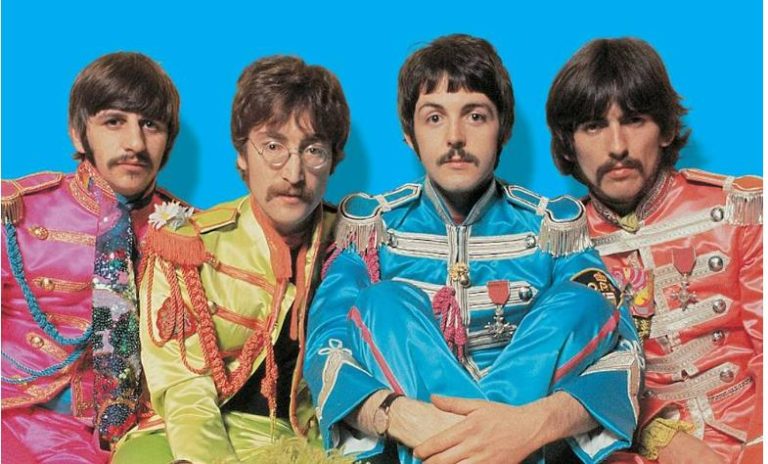
Long before they filled stadiums, altered global fashion, and defined a generation, the group that would become The Beatles was just another struggling outfit from Liverpool. They were desperate for gigs, broke, and constantly changing their name in search of an identity.
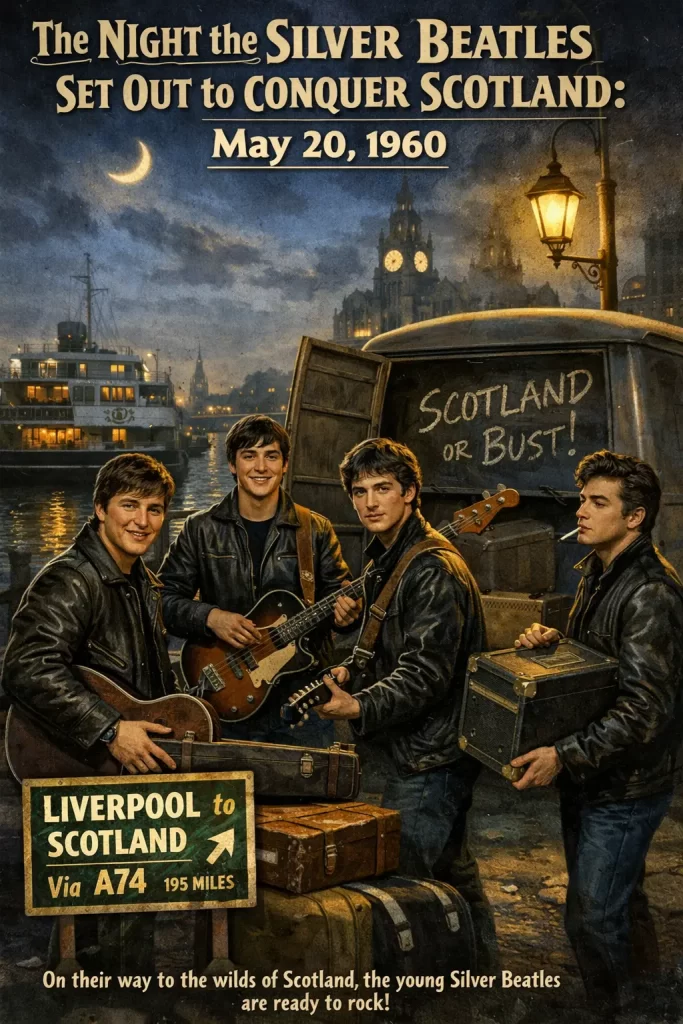
One of the most critical turning points in their early history occurred on May 20, 1960. On this day, the band embarked on their very first tour outside of their hometown, traveling to Scotland to serve as the backing group for pop singer Johnny Gentle.
To look back at this tour is to look at a comedy of errors, physical injuries, and teenage delusions of grandeur. Yet, this brief, chaotic week in the Scottish highlands was the forge that transformed a loose collection of amateur musicians into a tight-knit unit, setting the stage for their eventual path to global domination.
From Rejection to a Consolation Prize
The road to Scotland began with a failure. On May 10, 1960, the band auditioned for Larry Parnes, the prominent British pop manager who was looking for a backing band for his star singer, Billy Fury.
Desperate to make an impression, the group performed under the name Long John and The Silver Beatles. Despite their enthusiasm, the audition did not go well. Parnes was unimpressed with their lack of cohesion and specifically noted the shortcomings of their temporary drummer. The band failed to get the job backing Fury.
However, Parnes saw some raw potential in the young musicians. Just a few days later, he offered them a consolation prize: a brief, one-week tour of Scotland backing another one of his artists, Johnny Gentle. The tour was set to begin on May 20.
The band quickly accepted. Six days before leaving, they played a warm-up gig at Lathom Hall in Seaforth, Liverpool, under their new name, the Silver Beatles. Showing just how little respect they commanded at the time, the local promoter misspelled their name on the posters, billing them as the “Silver Beats.”
Alloa Town Hall: A Disastrous Debut
The Johnny Gentle tour kicked off on May 20, 1960, at Alloa Town Hall, located northwest of Edinburgh. For the duration of the tour, the posters ignored the individual names of the band members, billing them simply as “Johnny Gentle and his Group.”
The lineup for the tour consisted of John Lennon, Paul McCartney, George Harrison, bassist Stuart Sutcliffe, and Tommy Moore—a 36-year-old Liverpool forklift driver whom the teenagers had persuaded to join as their drummer, much against his better judgment.
The first few days of the tour were nothing short of a disaster. The band had done virtually no rehearsals with Gentle before hitting the stage. Tommy Moore, who was significantly older than the rest of the group, was uncomfortable and regretted leaving his stable job.
Furthermore, the tension within the band was highly visible. Paul McCartney was openly critical of Stuart Sutcliffe’s rudimentary bass playing. Embarrassed by his lack of technical skill and stung by the criticism, Stuart spent most of the opening performances playing with his back turned to the audience, hiding his hands.
The Van Crash and John’s Ruthless Professionalism
Things went from bad to worse on the third day of the tour. While traveling between venues, the band’s transport van was involved in a serious road accident.
While the guitarists escaped with minor cuts, drummer Tommy Moore bore the brunt of the impact. He suffered severe facial injuries and a concussion, and was rushed to a local hospital.
For Moore, the accident should have been the end of the tour. But John Lennon had different ideas. Showing the ruthless, driven streak that characterized his early years, John marched into the hospital, dragged the bandaged and concussed drummer out of his bed, and forced him back behind the drum kit. With Moore sitting dazed behind the drums, the band performed their scheduled show that evening. The experience cemented Moore’s resolve to quit the band the moment they returned to Liverpool.
Adopting the Rockstar Personas
Despite the lack of rehearsal, the physical injuries, and the fact that they were rapidly running out of money, the tour gave the young musicians their first real taste of the rock star lifestyle. They stayed in cheap hotels, traveled together, and performed for screaming crowds who didn’t know or care about their musical limitations.
To match their new status, several members decided to adopt stage names that sounded more glamorous than their working-class Liverpool realities.
- Paul McCartney adopted the pseudonym Paul Ramon (a name that, decades later, would inspire a young New York musician named Douglas Colvin to call himself Dee Dee Ramone, launching the punk band The Ramones).
- George Harrison became Carl Harrison, a tribute to his guitar hero, rockabilly legend Carl Perkins.
- Stuart Sutcliffe became Stuart de Stael, reflecting his passion for the French abstract painter Nicolas de Staël.
While John Lennon later claimed he refused to change his name, Paul McCartney recalled that John occasionally referred to himself as “Long John Lennon” or “Long John Silver” during the trip.
The Road Back to Liverpool: Becoming The Beatles
The tour wrapped up on May 28, 1960, and the broke, exhausted musicians returned home to Liverpool. Throughout June and July, they maintained a busy schedule, playing roughly 20 gigs around the Merseyside area, including a regular residency at the Grosvenor Ballroom in Wallasey.
As expected, the reluctant Tommy Moore quit the band shortly after their return. He was briefly replaced by Norman Chapman, but Chapman was drafted into the national service after playing only six shows. Once again, the band was forced to perform as a drummer-less, four-guitar lineup.
However, the experience in Scotland had changed them. Around the end of May 1960, they decided to drop “Silver” from their name, permanently becoming The Beatles.
The transition was gradual. Many local promoters and booking agents failed to notice the change, and newspaper ads and posters continued to refer to them as the “Silver Beatles” or “Silver Beetles” well into July. But the identity had been forged. Just a few months later, in August 1960, they would pack their bags for Hamburg, Germany, leaving their amateur days behind forever.
How do you think the history of music would have changed if Tommy Moore had stayed with the band, or if they had kept the name Silver Beats? Let us know in the comments below!