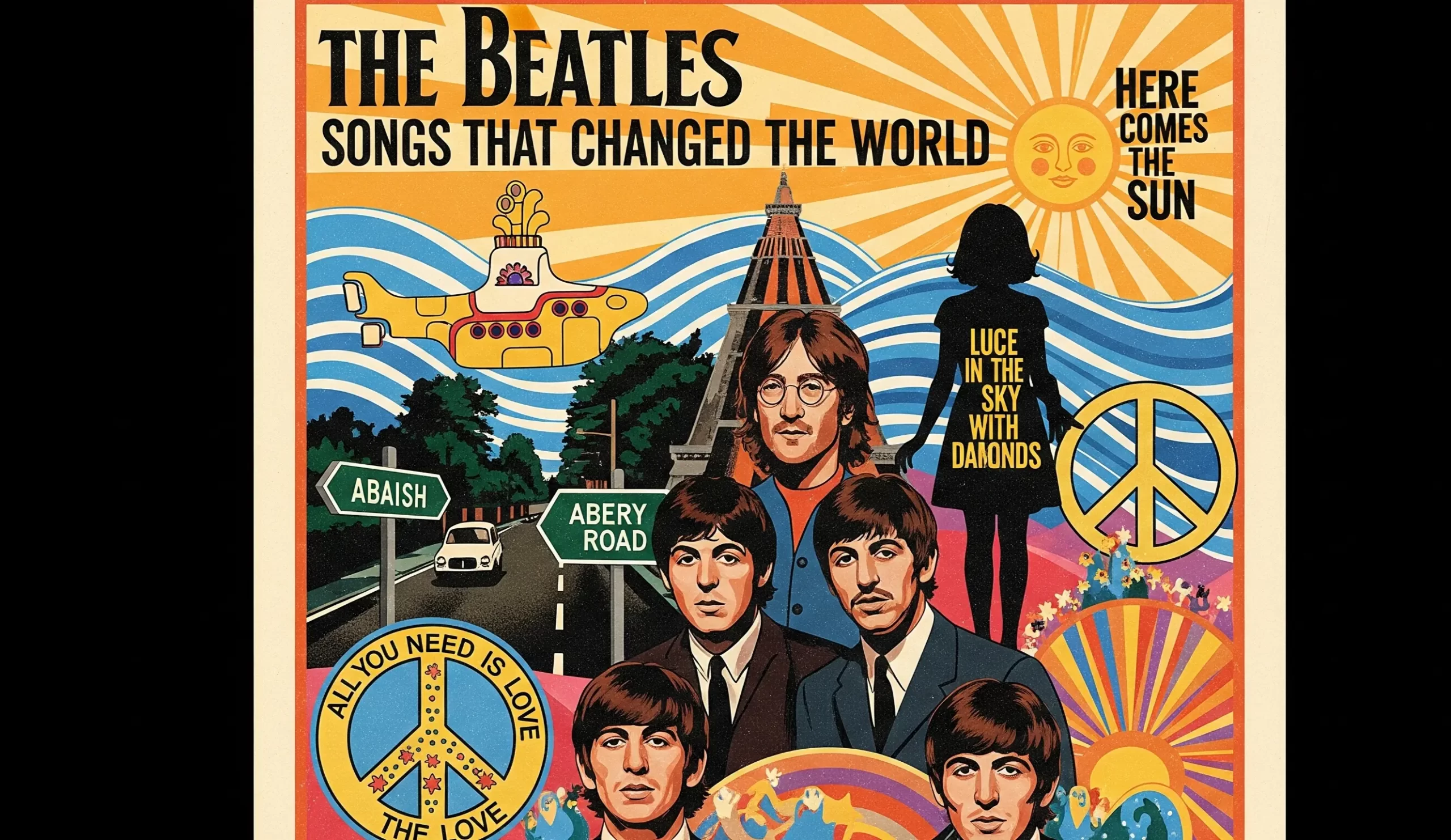
The Beatles Songs That Changed the World: A Cultural Revolution Through Music
Few bands in history have left as profound a mark on the world as The Beatles. Rising from Liverpool’s working-class streets in the early 1960s, this iconic foursome didn’t just change the face of music—they altered the cultural fabric of an entire generation. Their songs became anthems of love, protest, peace, and self-discovery. In this post, we’ll take a deep dive into the Beatles songs that changed the world, examining the sound, lyrics, and socio-political impact that made these tracks timeless milestones.
1. “I Want to Hold Your Hand” (1963)
Why It Mattered:
This is the song that launched the “British Invasion.” When “I Want to Hold Your Hand” hit American radio stations, it ignited Beatlemania across the U.S. It was more than just a catchy tune—it symbolized the beginning of a global cultural shift.
Impact:
- Broke records in both the UK and US.
- Helped introduce British rock to America.
- Marked a turning point in youth culture and global entertainment.
2. “A Hard Day’s Night” (1964)
Why It Mattered:
Accompanied by a feature film, this song represented the Beatles as cultural icons—not just musicians. The band’s image, humor, and charm were now global phenomena.
Impact:
- Reinvented the connection between cinema and rock music.
- Inspired bands to pursue multi-platform branding.
- Showcased working-class identity through art and sound.
3. “Yesterday” (1965)
Why It Mattered:
A haunting ballad performed by Paul McCartney, “Yesterday” stood out as a stark departure from rock ‘n’ roll norms. Its melancholic tone and orchestral arrangement redefined what a pop song could be.
Impact:
- Covered by over 2,200 artists.
- Showed that vulnerability and introspection had a place in popular music.
- Inspired singer-songwriter movements.
4. “Norwegian Wood (This Bird Has Flown)” (1965)
Why It Mattered:
This song introduced the sitar into Western pop music, thanks to George Harrison’s fascination with Indian classical music. The result? A psychedelic shift in how people viewed rock instrumentation.
Impact:
- Opened Western ears to Eastern sounds.
- Started a wave of cross-cultural music fusion.
- Influenced artists like The Rolling Stones and The Byrds.
5. “In My Life” (1965)
Why It Mattered:
This introspective and philosophical track was one of Lennon’s most personal creations. “In My Life” was a mature reflection on time, change, and memory—rare in pop music at the time.
Impact:
- Elevated lyrical content in pop music.
- Became a template for autobiographical songwriting.
- Inspired generations of reflective, poetic musicians.
6. “Eleanor Rigby” (1966)
Why It Mattered:
A somber tale of loneliness and death, “Eleanor Rigby” dared to tell a story that pop music had long avoided. Its use of a string quartet in place of traditional rock instruments was revolutionary.
Impact:
- Changed storytelling in popular music.
- Addressed societal issues through art.
- Broke barriers between classical and pop genres.
7. “Tomorrow Never Knows” (1966)
Why It Mattered:
This track was experimental even by Beatles standards. It utilized tape loops, reverse guitar effects, and Indian drones—essentially laying the foundation for psychedelic rock.
Impact:
- Influenced Pink Floyd, The Chemical Brothers, and countless others.
- Merged spirituality, psychedelia, and sonic innovation.
- Proved the Beatles were fearless musical pioneers.
8. “Strawberry Fields Forever” (1967)
Why It Mattered:
Inspired by John Lennon’s childhood memories, this dreamlike song blurred reality and imagination. It signaled the full onset of the Beatles’ psychedelic era.
Impact:
- Pushed the boundaries of what a pop song could sound like.
- Used advanced studio techniques (like Mellotron and reverse tape).
- A defining track of 1967’s “Summer of Love.”
9. “All You Need Is Love” (1967)
Why It Mattered:
Premiered during the first-ever global satellite TV broadcast, this anthem became a universal message of peace and unity during the Vietnam War and civil rights movements.
Impact:
- Became the anthem of a global peace movement.
- Showed music’s power to transcend language and borders.
- Embodied the 1960s idealism and counterculture.
10. “Hey Jude” (1968)
Why It Mattered:
A song of comfort and encouragement, “Hey Jude” became an international hit, staying at #1 in the U.S. for nine weeks. Its extended coda was groundbreaking in pop music format.
Impact:
- Encouraged emotional connection through music.
- Redefined how long a “hit single” could be.
- Still performed by audiences around the world today.
11. “Revolution” (1968)
Why It Mattered:
This was Lennon’s direct response to global political upheaval. It showed that the Beatles were willing to speak out, questioning violence and ideologies on all sides.
Impact:
- Encouraged political dialogue in music.
- Sparked controversy, discussion, and debate.
- Inspired politically conscious rock musicians.
12. “Let It Be” (1970)
Why It Mattered:
Paul McCartney’s message of resilience and peace during the band’s dissolution became one of their most iconic parting gifts to the world.
Impact:
- A universal hymn of hope and surrender.
- Used at vigils, funerals, and historic moments.
- Continues to comfort people worldwide in times of distress.
Conclusion: A Legacy That Still Echoes
The Beatles didn’t just write songs—they wrote chapters of human history. From redefining musical genres to promoting peace, challenging norms, and pushing the boundaries of sound, these songs are more than just classics—they are cultural revolutions in 3-minute formats.
Even decades later, their influence resonates in today’s music, social movements, and personal lives. Whether you’re listening on vinyl, Spotify, or the radio, The Beatles songs that changed the world continue to inspire, heal, and awaken new generations.