“Just Stunning”: The Beatles Album That Raised the Bar for Paul Stanley
When The Beatles first touched down in America in 1964, they didn’t just enter the U.S. music scene — they transformed it overnight. The success of “I Want to Hold Your Hand” launched the British Invasion, reshaping popular music and inspiring an entire generation of young Americans to pick up guitars.
E Street Band guitarist Steve Van Zandt summed it up perfectly:
“On February 8th, there were no bands in America; on February 9th we had Ed Sullivan, and on February 10th, everybody had a band in their garage. It was literally overnight.”
The Fab Four’s dominance inspired a wave of British acts — from The Dave Clark Five to The Rolling Stones — to try their luck in America. Stones manager Andrew Loog Oldham famously declared, “There is The Beatles and then there is everything else.”
A Shift Towards Folk and Honesty
By the mid-1960s, however, the musical landscape began to shift. The rise of folk-rock — spearheaded by Bob Dylan and The Byrds — brought a new emphasis on authenticity and lyrical depth. Van Zandt notes:
“The floodgates opened until the summer of ’65, when the Americans took the charts back with the folk-rock of The Byrds and Bob Dylan.”
Dylan’s raw, poetic songwriting didn’t just captivate audiences — it also caught the attention of The Beatles themselves. John Lennon later admitted that many of his favorite Beatles songs were the ones that felt most honest, a trait Dylan embodied.
When The Beatles released Rubber Soul in December 1965, it was clear Dylan’s influence had taken root. The album’s more stripped-back arrangements and introspective lyrics marked a creative turning point, blending folk sensibilities with the band’s melodic pop craftsmanship.
Paul Stanley’s Praise for Rubber Soul
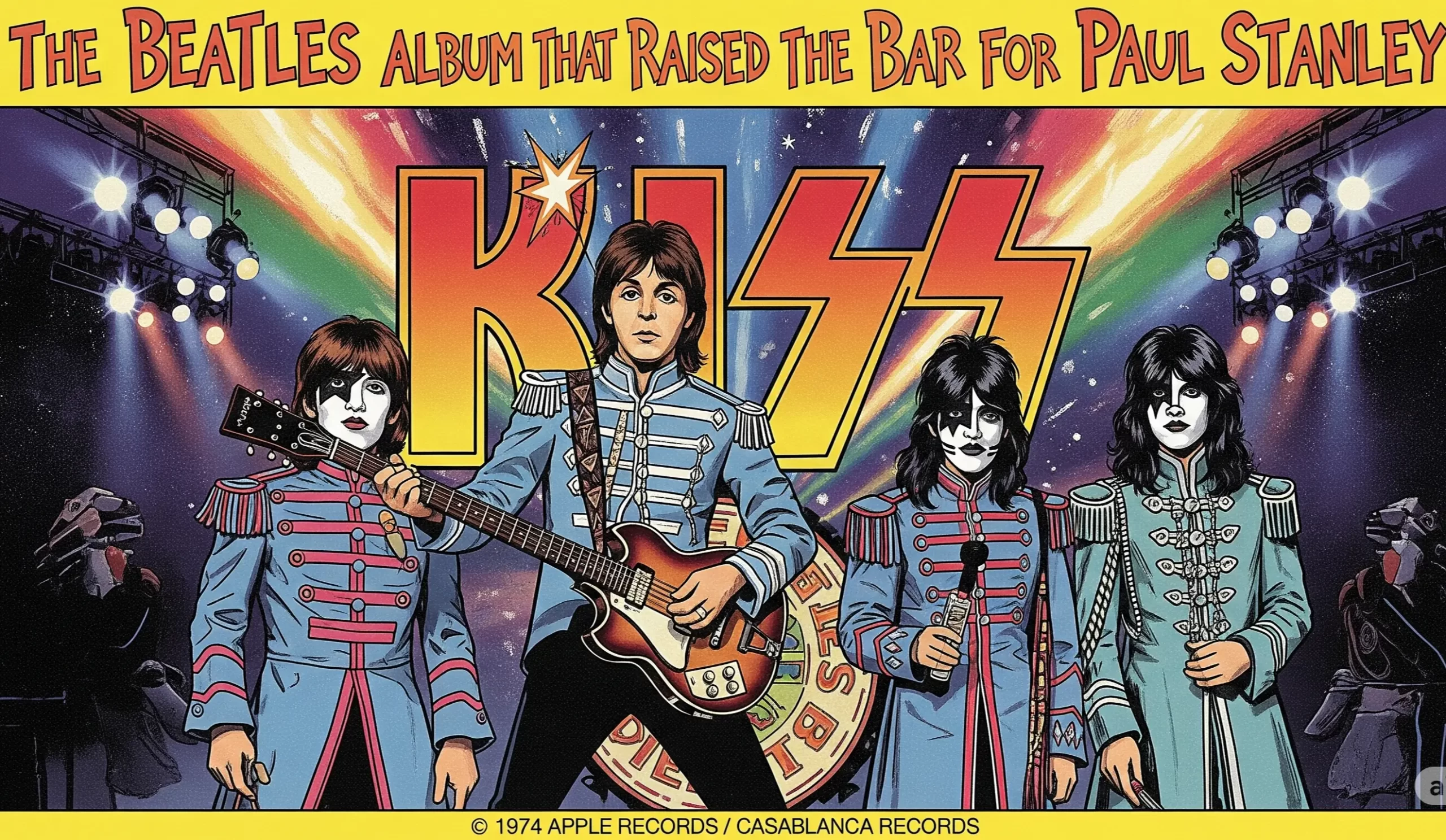
Among the countless musicians inspired by Rubber Soul was Paul Stanley, frontman of Kiss. Speaking about the album’s impact, Stanley was quick to highlight its maturity and focus:
“Not only did Rubber Soul show the depth and breadth of their writing – as if that wasn’t obvious enough – they raised the bar. It was influenced by the folk music movement. This time, there was no superfluous adornment to anything. A song like ‘In My Life’ was just stunning, and the same applies to ‘Norwegian Wood.’”
Stanley admired how the band absorbed influences from Dylan, Donovan, and Judy Collins without losing their unique identity:
“The music being made by Dylan, Donovan and Judy Collins had really rubbed off on them, and yet they retained who they were. Their own identity that made them so great was kept. I found that album really, really impressive.”
The Lasting Influence of Rubber Soul
Today, Rubber Soul is often cited as a pivotal Beatles album — the moment they evolved from pop icons to serious album artists. Its balance of personal reflection (“In My Life”), narrative experimentation (“Norwegian Wood”), and inventive musicianship set the stage for the more ambitious works to come, including Revolver and Sgt. Pepper’s Lonely Hearts Club Band.
For Paul Stanley, the album remains a benchmark in songwriting and authenticity — proof that even the biggest band in the world could still surprise, innovate, and grow.